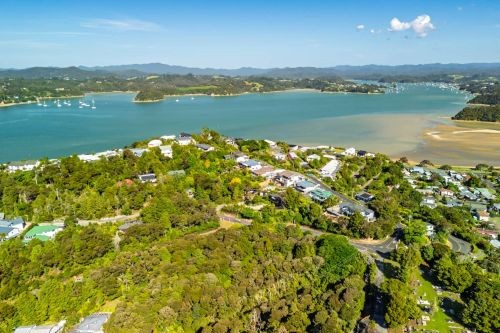
Covering just over 13,000km², Northland is home to around 190,000 people, spread across a mix of urban townships, coastal villages and rural communities.
Among the main centres, Whangārei is the region’s largest city, while Kerikeri is known for its historic sites and vibrant arts scene. Paihia acts as a gateway to the Bay of Islands, Dargaville reflects Northland’s farming and forestry roots, Russell and Kaikohe hold deep historical significance, and Kaitaia serves as the Far North’s main centre and gateway to the tip of the country.
Often referred to as the Winterless North, this top end of New Zealand generally offers a gentle pace of life and a warm, community-focused feel. The region’s natural beauty and wide range of recreational hotspots make it a great base for those seeking a balance between work and leisure.
Whether it’s by the coast, in town or on a rural block, life here leans towards simplicity - morning walks on the beach, weekend markets and evenings under the stars. It’s a quality of life locals talk about often: relaxed but active, outdoorsy and connected - and easy to settle into, whether you're a newcomer or a long-time local.
Northland’s communities vary widely, but they’re united by a down-to-earth ethos and strong local ties. Residents tend to choose where they live based on how they want everyday life to run. Coastal areas like Mangawhai, Bream Bay and Paihia are shaped by the water - active, social townships with a strong sense of place. Kerikeri blends history, horticulture and a growing café and arts scene, while Whangārei anchors the region as its main service and employment centre.
Beyond the towns, rural areas offer room to breathe and a more self-sufficient way of living, often within easy reach of schools, services and local hubs. Coastal, town or country, Northland gives you plenty of inspirational – and aspirational – community options.
Suburb spotlight: Read about Rawene and the renaissance that is happening in the community →
Thinking about buying or selling in Northland? Talk to a local expert →
Day-to-day life in Northland is well supported. In terms of healthcare, the largest public hospital is located in Whangārei, offering emergency and specialist services. This is reinforced by medical centres, GP clinics, pharmacies and allied health providers throughout the Hokianga, Bay of Islands and Far North, with private clinics adding further choice.
For shopping and essentials, Whangārei serves as the region’s main retail hub, with supermarkets, major retailers and local shopping precincts. Kerikeri, Paihia, Mangawhai and Dargaville all offer strong local centres, covering groceries, hardware, hospitality and everyday services without needing to travel far. Libraries, community facilities, sports grounds and aquatic centres are spread across the region, supporting everything from youth sport to arts, events and recreation. It’s a practical setup - not overbuilt, but well suited to the way people live here.
Commute times in Northland depend largely on where you live. In and around Whangārei and the wider coastal hubs, daily travel is typically straightforward, with many people working locally or within short driving distances.
Further out - particularly for those living rurally - commutes can be longer, but traffic remains light by city standards. State Highway 1 connects the region north to south, with peak delays most noticeable during holiday periods or known bottlenecks. That said, ongoing upgrades continue to improve safety, travel times and reliability across the region. Public transport in Northland is convenient, with regular bus services connecting the main townships and centres.
Education features strongly in Northland, with a wide range of options available. At the secondary level, well-established schools include Whangārei Boys' High School and Whangārei Girls' High School, both recognised for scholastic and sporting achievements. Further north, Kerikeri High School and Bay of Islands College provide a strong academic track record and a broad programme, while Northland College in Kaikohe and Bream Bay College in Ruakākā expand options across the wider region. These schools offer a good selection of academic, sporting and vocational pathways.
Primary schooling is also well represented, from established options like Riverview School in Kerikeri, and Mangawhai Beach School through to smaller coastal and rural schools that serve their local communities with a focus on engagement and wellbeing. In Mangawhai, a new independent secondary school - Mangawhai Hills College - is due to open for Years 7–13, adding further choice as the area grows.
Want to live near a school that suits your family? Talk to our local team →
You’ll find everything from coastal baches and family homes to farmhouses, lifestyle blocks and rural properties, with towns offering more established residential pockets. New builds and subdivisions are appearing in select areas, but the overall feel remains open and uncluttered - a contrast to higher-density regions further south.
Median house prices in Northland remain lower than many other parts of New Zealand, making it appealing for buyers seeking land, flexibility or a slower pace without stepping too far away from everyday services. The result is a property landscape that is spacious, accessible - and well suited to a wide range of life stages.
Looking for space, lifestyle or a smarter move? Check out our latest listings →
Northland is built for getting outside. The coastline delivers year-round boating, fishing, sailing and diving, with one attraction - the Poor Knights Islands - widely regarded as one of the world’s top diving and snorkelling spots. Calm harbours, sheltered bays and easy boat access make getting on the water part of everyday life rather than a special occasion.
On land, the region offers a different kind of scale. Walking tracks wind through native forest and coastline, including Waipoua Forest - home to Tāne Mahuta - while cycling routes, coastal roads and long scenic drives reward slow travel. From sandboarding at Te Paki to exploring the Twin Coast Discovery Highway, the region rewards curiosity without demanding long travel times or major planning.
Life here is low-key and social, shaped more by people and place than packed schedules. Weekends might revolve around local markets, community events, club sport or simply catching up with friends over food - often outdoors, often unplanned.
Throughout the year, a handful of popular events add rhythm to the calendar, from the Northland Fritter Festival in Whangārei to the Kerikeri Half Marathon, alongside cultural celebrations, surf competitions and regional sports fixtures. Add live music, local dining spots and a strong volunteer and club culture, and you’ve got a region where socialising and entertainment feel accessible, familiar and easy to be part of.
Ready to enjoy more of your weekends? Talk to a Northland local →
We publish monthly Residential and Rental Market Updates - you can read them here.
Read the latest real estate news from Barfoot & Thompson here.
Looking to invest in property and become a landlord? Read the latest in property management here.