
Auckland Property Market Commentary - October 2026

Outlook for Auckland region
New Zealand’s volatile economic recovery continued through the first six months of 2026. Business confidence has started to improve from recent lows, although uncertainty about the effects of global events, higher energy and transport prices, rising inflation, and increasing interest rates are likely to impact the pace of the recovery. Strong commodity prices and a fall in the relative value of the New Zealand dollar should continue to support the export sector and growth in provincial centres. Net overseas migration totalled 20,300 in the 12 months ended July 2026. This was significantly below the levels recorded in 2023 and is likely to influence the rate of population growth and consumer demand.
The medium-term economic outlook is uncertain. Current polling suggests that the outcome of the November 2026 general election is uncertain. Minor parties are currently attracting considerable support, while the combined support for the National and Labour parties is just over 50%. Although current forecasts predict that the economy will continue to expand over the next three years, higher energy costs, rising inflation and interest rates, and persistently high unemployment will create a challenging environment for whoever forms the government post-election.
Auckland is the country’s largest region and main economic hub, and economic conditions have been soft in recent times. Over the last year, Auckland’s regional GDP expanded by 2%, its population grew by 1%, employment increased by 0.7%, unemployment reached 6.5% of the labour force, and house prices fell by 2.3%. Although these indicators show that Auckland’s economy remains soft, market conditions should rebound as the national economy improves, albeit with a time lag.
Office market
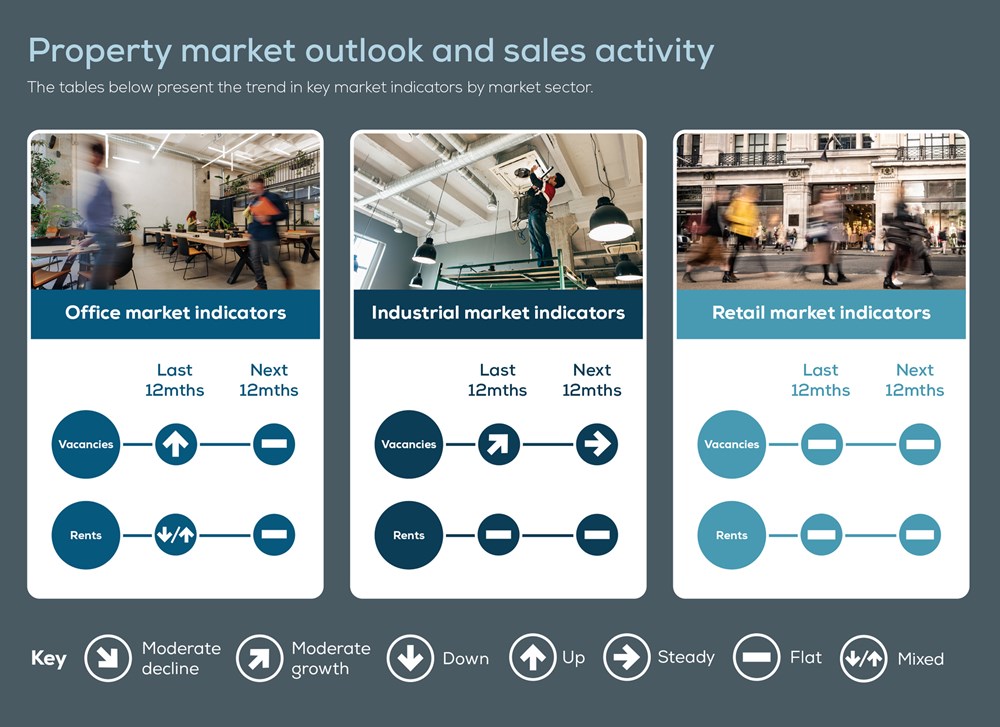
Auckland’s office market continues to experience challenging conditions. The broader economic and business outlook has created an environment in which prospective tenants lack urgency to commit to leasing deals.
Landlords remain flexible, offering turnkey solutions and opportunities to divide floors into smaller tenancies. Incentives remain substantial, particularly for secondary-quality space, and some landlords are prepared to negotiate arrangements covering the cost and ownership of tenant fitouts.
The flight to higher-quality buildings has continued in 2026, with businesses optimising their space requirements and upgrading to better buildings while reducing their tenancy footprints. Remote work for one or more days each week also remains common, and businesses continue to adjust the amount of office space they need.
CBD vacancy rates are now above 15%, approximately 0.5 percentage points higher than a year ago. The metropolitan office market has followed a similar trend, with limited movement in its overall vacancy rate over the last 12 months. Despite these increases, market rents have remained flat over the past year, although landlords have increased leasing incentives for non-prime space.
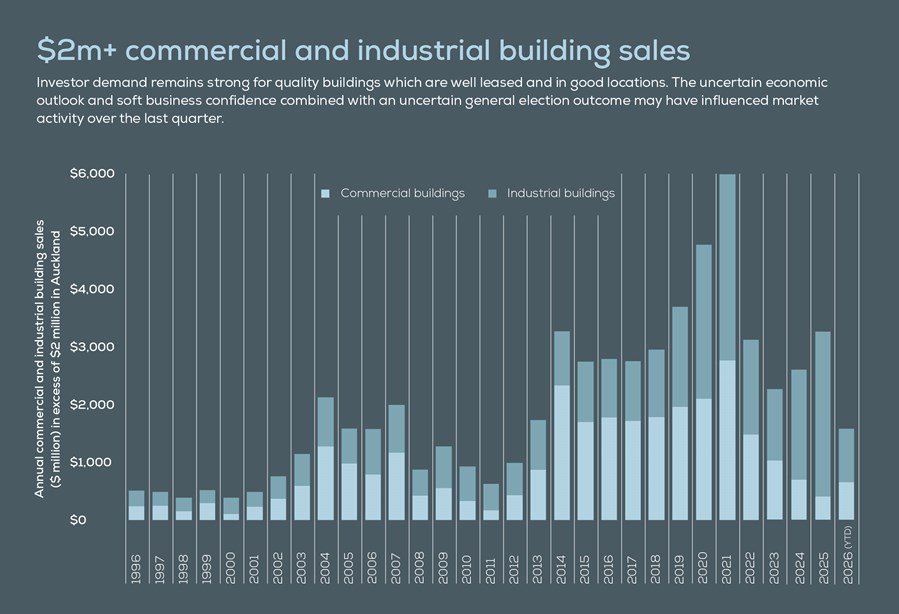
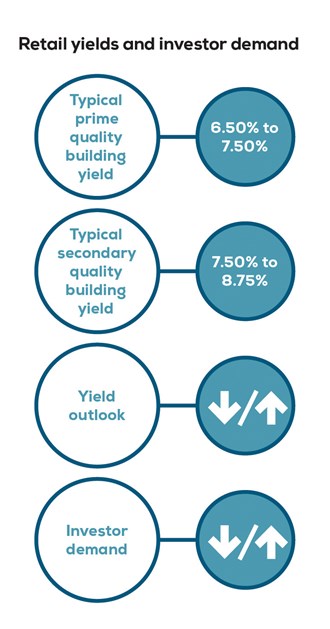
Investor demand and sales activity remain mixed, but well-located, high-quality buildings with strong tenant covenants continue to attract buyers. A significant number of developments are still proposed, particularly in the CBD. At current levels of net absorption, these projects are likely to increase the amount of backfill space.
Industrial market
The industrial market was flat over the first half of 2026. Steady economic conditions combined with increased uncertainty over the short-term outlook weighed on market activity. Logistics-sector organisations have provided ongoing demand for space, which has supported current occupancy levels.
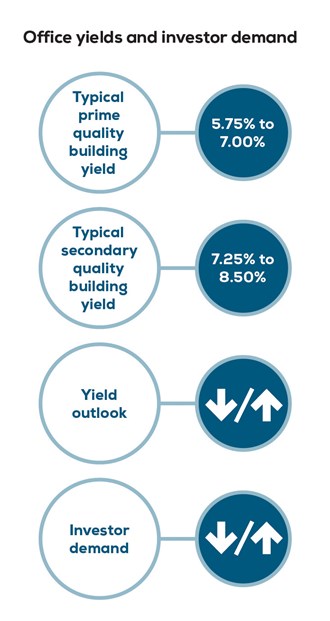
Growth in demand for additional space has been slow, with landlords offering increased incentives for leases on secondary-quality buildings. Investor demand remains robust for good-quality buildings in preferred precincts with strong tenant covenants, although deals are taking longer to negotiate than in the past.
The number of building consents for industrial premises has remained robust, with 132 consents issued for a total of 249,500m² of space in the 12 months ended June 2026, down from 131 consents with a total floor area of 361,100m² in the previous 12 months.
Consenting over the last year has been lower than the previous five years, when the average annual number of buildings consented was over 160 with a total combined floor area of 397,000m² of space. A proportion of these buildings were speculative developments, and although they have met tenant demand for new space, there is still some excess space available to lease. In addition, development feasibilities remain tight with limited rental growth and rising construction costs. As a result, development activity has eased.
The market’s overall vacancy rate continued to increase over the last six months, increasing from 3.1% in December 2025 to 3.4% in June 2026. Although the amount of vacant space increased, it remains low at just over 3% of the total stock, reflecting the strong demand for space and a relatively tight demand/supply balance in the market.
Retail market
The outlook for New Zealand’s retail sector remains challenging. Retail sector tenants are continuing to face challenging market conditions, with soft consumer confidence, high cost of living, and rising interest rates all impacting store performance.
Auckland’s labour market conditions remain soft, with unemployment at 6.5%. Despite these soft economic indicators, Auckland’s total retail sales increased by 5.5% over the last year. However, some retail precincts and store types performed better than others.
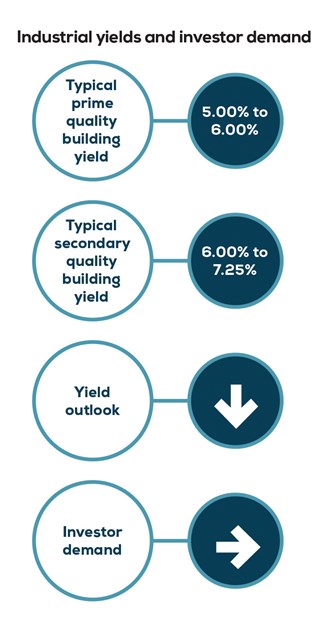
Tenant demand continues to demonstrate a drift to well-located, good-quality space, with vacancy rates stabilising or falling slightly in prime locations. However, in the short term, overall market conditions are likely to be difficult, with soft consumer confidence, the impending general election, high cost of living, and increasing interest rates impacting retail sales, tenants’ demand for space, and their ability to pay higher rents. In the medium term, household spending is expected to gradually increase, although the uncertain economic environment will impact retail activity. The extent of this impact is difficult to predict, and the higher cost of living is likely to place pressure on household budgets and constrain discretionary spending, as households allocate a higher proportion of their budget to transport expenses.
The retail property outlook is uncertain. The implications of November’s general election, higher interest rates, and overseas disruption to energy markets and global trade are impacting local economic activity and, as a consequence, tenant demand for retail space. At this stage, it is difficult to look through these events; however, in the medium term, tenant requirements for retail space will persist, and the market is likely to eventually improve.
Our research
The market reports included in this publication have been prepared independently by Ian Mitchell from Livingston and Associates.
Every effort has been made to ensure the soundness and accuracy of the opinions, information, and forecasts expressed in this report. Information, opinions and forecasts contained in this report should be regarded solely as a general guide. While we consider statements in the report are correct, no liability is accepted for any incorrect statement, information or forecast. We disclaim any liability that may arise from any person acting on the material within.